
Let’s start by diagnosing your problem. You may have low boiler pressure if…
If you notice any of these telltale signs, your boiler pressure is almost certainly low.
No, luckily low boiler pressure isn’t dangerous. It can however be very annoying—especially during the winter—so it’s best to resolve the issue as soon as possible.
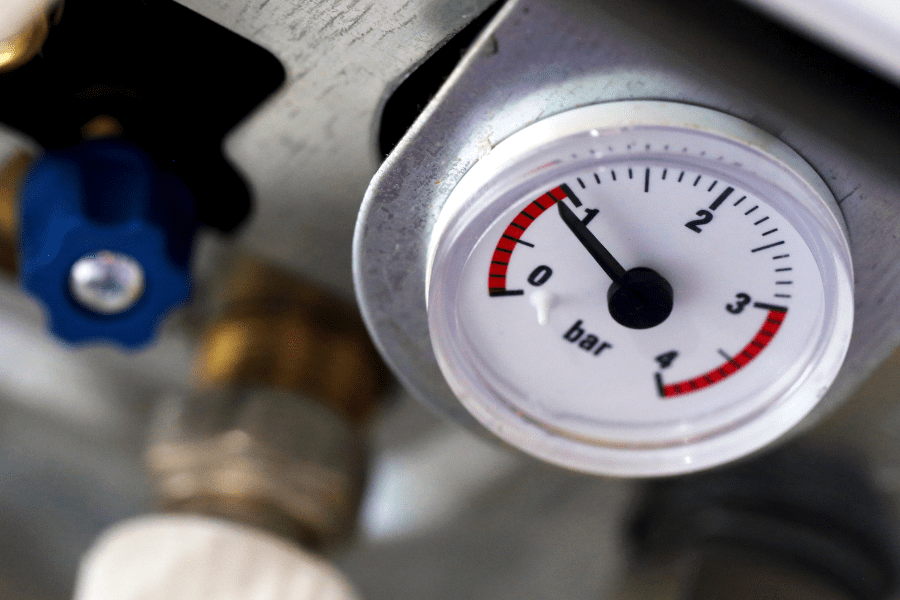
To check if your boiler is suffering from low pressure, look at the water pressure gauge on the front of your boiler.
Different boilers can have different pressure gauges, so it is important to look for the right information. If you aren’t sure about what you’re looking for, this information can be found in the user instructions for the boiler.
If you have a digital gauge, then your boiler pressure is typically represented by bars. If the reading on the screen is less than 1 bar, then that is a sign that there is low pressure. Your display may also indicate low pressure by delivering a pressure warning or a flashing reading.
If you have a hydraulic gauge, then your boiler reading is likely to be on a dial. There will be red sections on the dial which indicate low and high pressure. If the indicator needle is in the red part on the left-hand side, then the pressure is too low. If it is in the red section on the right-hand side, then the water pressure is too high.
Hot tip: Check the water pressure on a regular basis to avoid waking up without any heating or hot water!
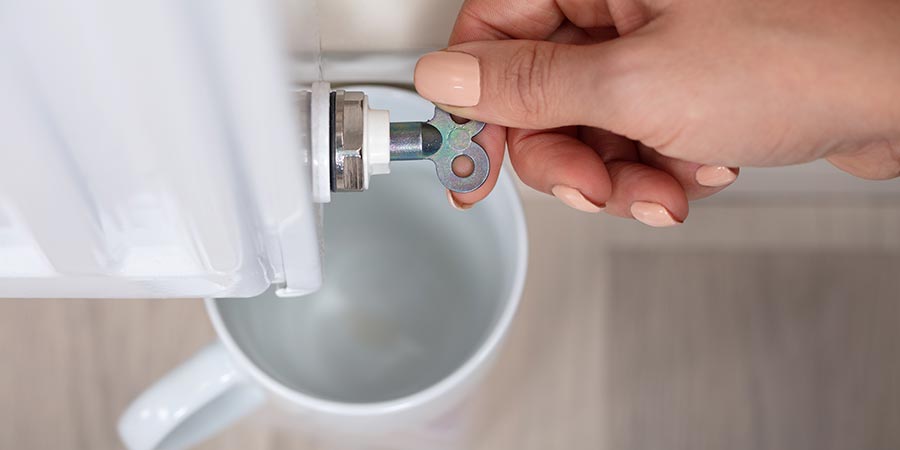
Usually, low boiler pressure comes from two main issues: bleeding radiators or a leak in your heating system. Let’s take a closer look at these…
One issue can occur after bleeding radiators. Releasing water from your central heating system can lead to a pressure loss. Fortunately, there is a way you can increase pressure in your boiler system, without having to call out an engineer.
The other reason for low boiler pressure is that there may be a leak somewhere in your central heating system. This leak may be small and barely perceptible, which is why the drop in pressure has been gradual.
You can see if this is the case by looking for damp patches near the radiators, pipes and boiler. Remember, not to look for leaks inside the boiler unit itself. This is best left to a Gas Safe registered heating engineer.
If you find the leak, then an engineer should be able to fix the problem for you. If you cannot find a leak and low boiler pressure persists, then calling out an engineer to help find the problem can save you time, stress, and cost in the long run.
Firstly, it’s essential to check your boiler manual before you begin to re-pressurise the boiler. Every boiler is different, so go for the manufacturer’s instructions first. Many manufacturers also post instructional videos on their website for how to repressurise your boiler, so check them too for a step-by-step visual guide.
Remember: if at any point you are concerned about your boiler system, then it is best to call out a Gas Safe registered engineer than try to fix the issue yourself.
You should only repressurise your boiler when you discover that it’s too low, though we do recommend checking the pressure every few weeks, just to be on the safe side.
If you have to repressurise the system on a regular basis, this indicates that there’s a leak somewhere in the system. To prevent water damage, it’s best to find this leak and fix the issue.
If your water pressure isn’t improving, it’s best to call out a Gas Safe registered engineer who can come and diagnose the issue for you.