
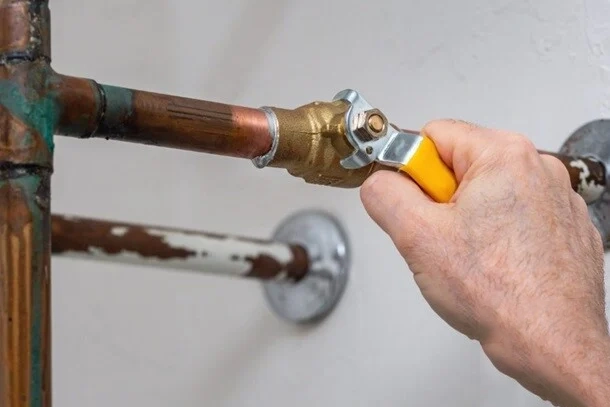
Despite the stopcock being the main water valve in every UK home, almost seven million UK citizens have no idea what a main stopcock valve is. What’s more, a quarter of us has never even tried to find our stopcock according to research by Direct Line.
A stopcock, sometimes called a stop tap, controls the entire supply of mains-fed water in your home. The tap is always on, allowing water to enter as and when you need it. But the stopcock lets you shut off the supply in an emergency, such as a burst pipe, or to carry out plumbing work.
Whether your stopcock is open or closed determines whether water enters the pipes of your home, serving crucial appliances like:
In short, when your stopcock is shut off, your state-of-the-art, modern domestic lifestyle grinds to a halt.
It’s crucial to know where your stopcock is because it’s the control tap or isolation valve for your mains water supply. It’s also often called a ‘stop tap’.
This means it’s the first place you should go in the unlucky event of a pipe bursting or a leaking tap. Shutting it off can prevent a minor problem from becoming a major one that might create a flood, causing hundreds or even thousands of pounds worth of damage to your home.
Your external stopcock is the tap located outside your home that lets the water supply serving your street into your home. Your internal stopcock controls the flow of water inside your home.
Some homes don’t have external stopcocks, only internal ones. In any case, in the event of a flood in your home, your first priority should always be to switch off your internal stopcock.
It’s also wise to find out if you have an external stopcock so that if your leak or flood is caused by your external supply pipe leaking or rupturing, after shutting off your internal stopcock you can shut off your external stopcock one too, to stop the water flooding your home and allow for repairs.
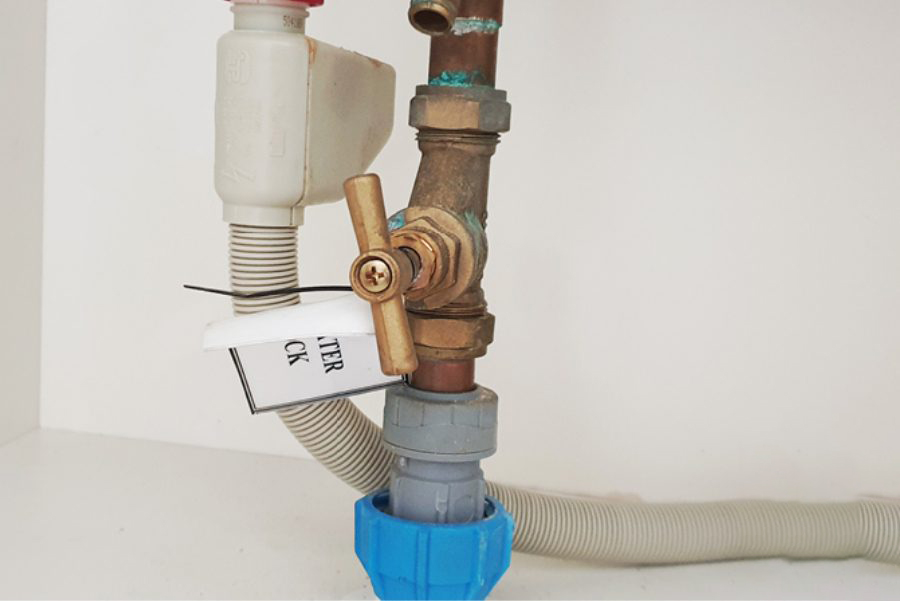
Your property normally has two stopcocks. You’ll find the internal stopcock inside your home, as close as practicable to the point where the cold water supply enters your property, usually under the kitchen sink or in a downstairs WC or bathroom.
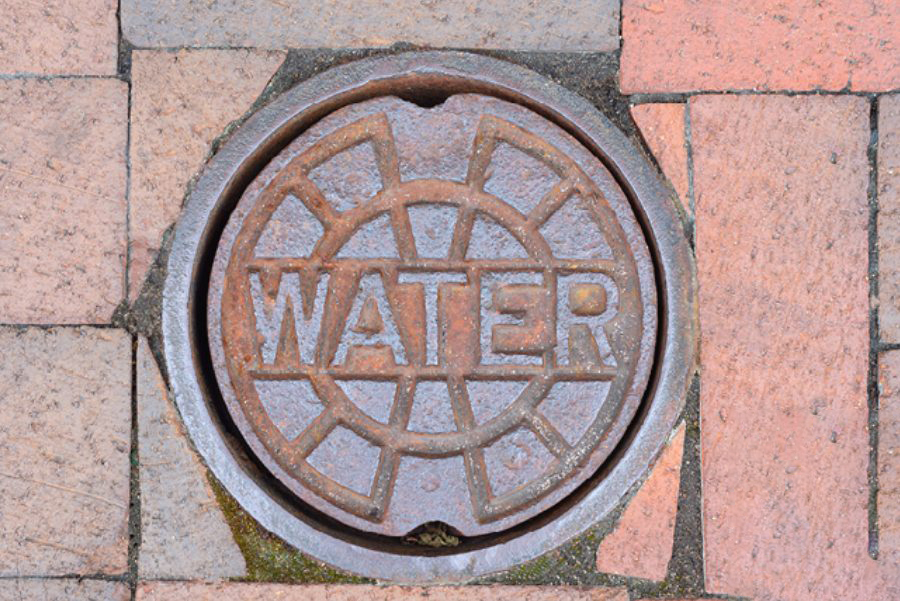
Your external stopcock is outside, on the boundary of your property, and it’s the responsibility of your water supplier to fix it if there’s a leak.
If you discover a leaking stopcock tap, it’s essential to tackle it immediately, so it doesn’t get worse.
A stopcock is made up of three main parts:
Two compression nuts join the tap to the water pipes on either side.
This sits directly below the tap and prevents water from flowing up inside the spindle.
his is the main body of the tap, between the compression nuts, and is the mechanism inside the stopcock which stops the flow of water.
If you can actually see water leaking out of your stopcock, it’s an issue with either the compression nuts or the gland nut. If you can’t actually see any water leaking, but when your stopcock is turned off you still have water flowing from your taps, you’ve got an issue with the head gear joint.
Your internal stopcock or stop tap is usually located under your kitchen sink or in a downstairs bathroom.
Your external stopcock (if you have one) is often located near the boundary of your home under a small square cover. If your property has a water meter, the external stopcock will probably be housed with it.